My last week in Japan I visited two holy mountains, and because of the introspection they both gave me I wanted to post about them separate from the other cultural and historic things in the Kyoto/Osaka area.
The first was Mount Kurama, where Buddhist temples and Shinto shrines share space with ancient cedar trees believed to be the reincarnation of Mao-son, one-third of their Trinity, “…the Sonten Trinity, the ‘Glorious Light,’ the ‘Supreme Soul of the Universe,’ a composite of the three symbols of power, light, and love.” It is also the supposed birthplace of Reiki, a form of energy healing.
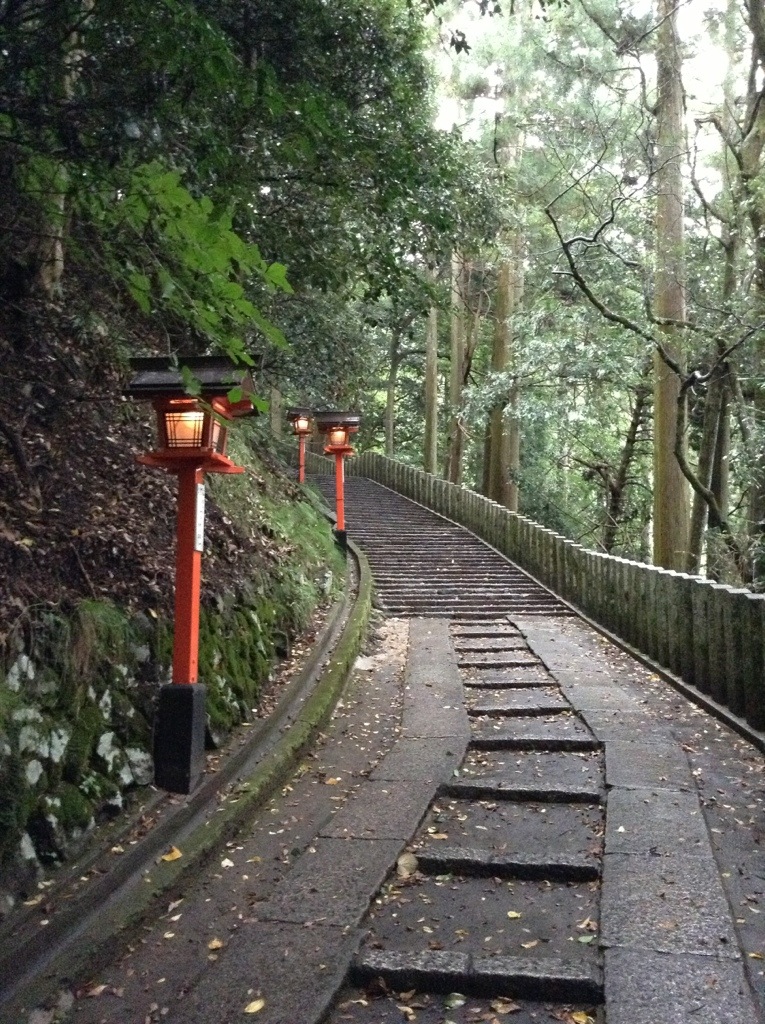
It is less than an hour train ride from Kyoto, but off the beaten path. I would never have found it except the friendly Tai-chi student/german/korean/guide I met the day before mentioned it. The train ride was lovely and the walk up the mountain nearly deserted (probably in part due to the rain), so I had space to be quiet and feel the energy of the place.
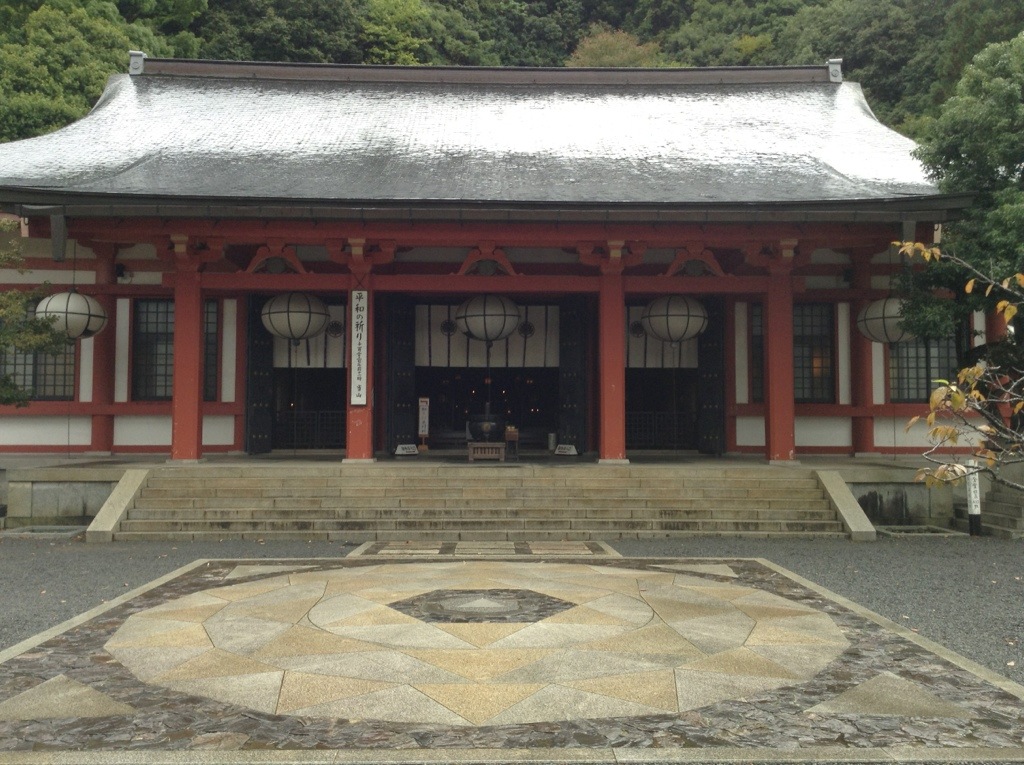
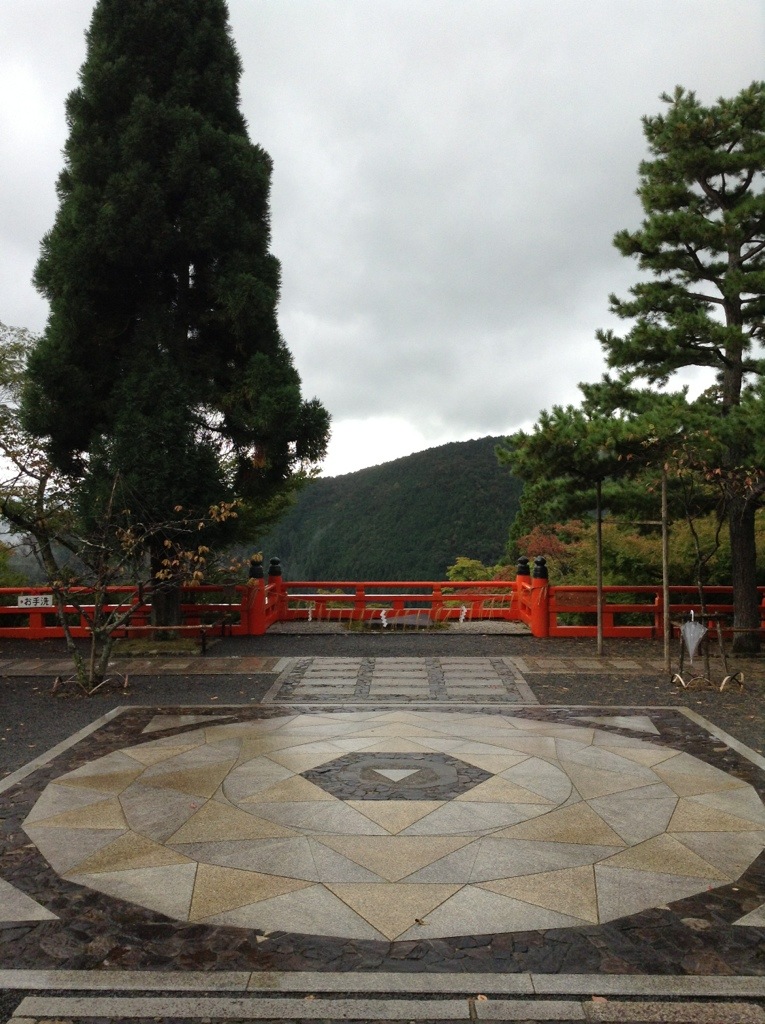
In front of the main temple is a huge stone paved mandala which I suspect many people walk over without noticing. However I had done my research and knew this to be a semi-famous “power spot.” I walked around in clockwise, as seemed appropriate to me, but did not stand of the center. It was deserted when I got there however later when I came back down I watched as a group of three middle aged folks took turns standing there, with their eyes closed and holding a crystal over their heads. Kind of an odd sight! Crystals usually weird me out. But anyway, the feeling was spectacular.
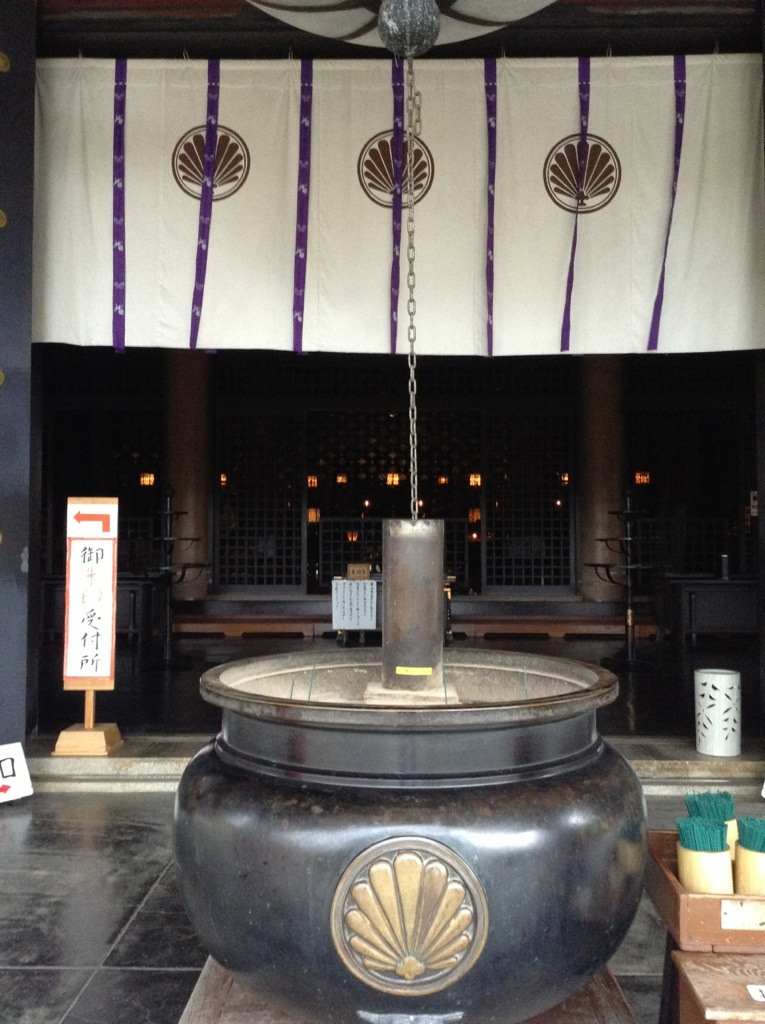
The evening before I had a conversation with Jonathan about the sense of inner calm we both experienced on the Camino. That conversation stuck with me as I walked, and made me smile and wonder as I noticed the symbol of this temple is reminiscent of the scallop shell that guided me through Spain…
The wonder and reminiscing continued to grow on my visit to Kōya-san (Mount Kōya), a half day south of Osaka. I had found out about Kōyasan during some late night googling of “best places to hike in Japan,” and after reading more about it I knew I had to go.
There is a more manifest connection with the Camino de Santiago here: there is always talk among pilgrims about what to do next, what other pilgrimages are out there. And one in Japan kept coming up, but no one had done it. The pilgrimage to 88 temples around the island of Shikoku always seemed epic and mystical and mysterious. While I did not get to lift that veil on this trip, Kōyasan is a holy mountain where many pilgrims would stop on their way to the island, the Japanese home of the Shingon sect of Buddhism. It has been designated one of three “Sacred Sites and Pilgrimage Routes in the Kii Mountain Range” World Heritage Sites.
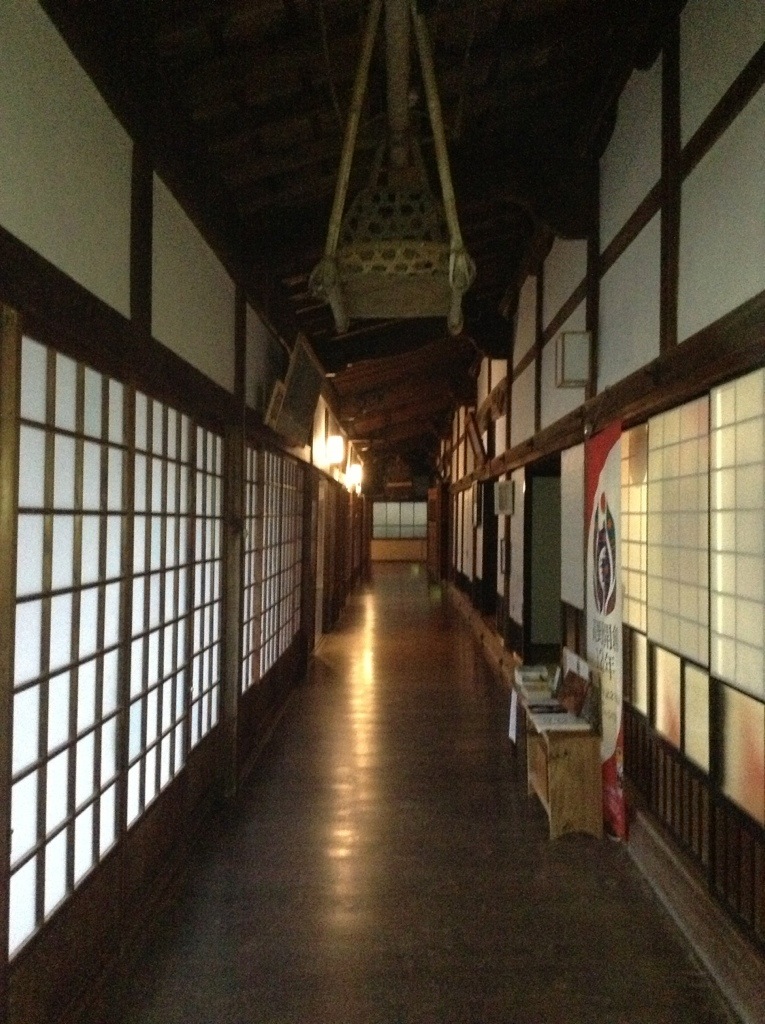
Of the 120 temples in the town, 70+ accept overnight guests. I booked a night in a small one off the main road (at $110 it blew my budget, but included dinner and breakfast). After checking in I wandered about in the rain, ending up in the sprawling Okunion cemetary. The mausoleum of Kūkai (aka Kōbō Daishi) is the centerpiece which dates to the 800s. It is a really cool place of massive cedars and all sorts of gravestones and memorials.
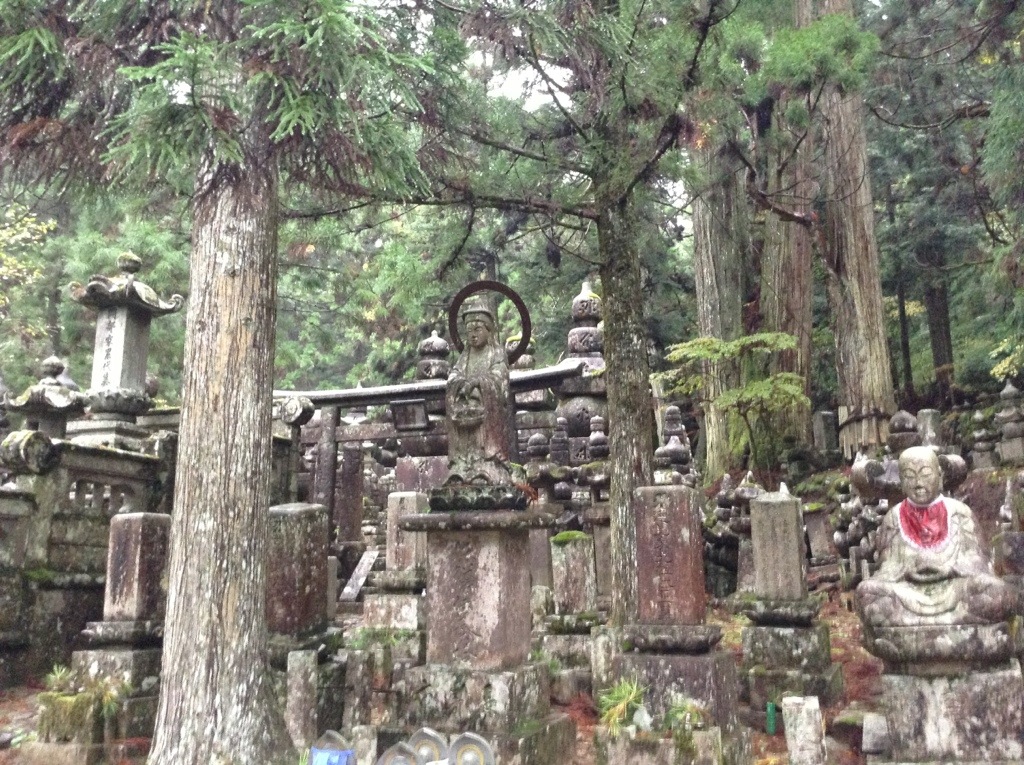
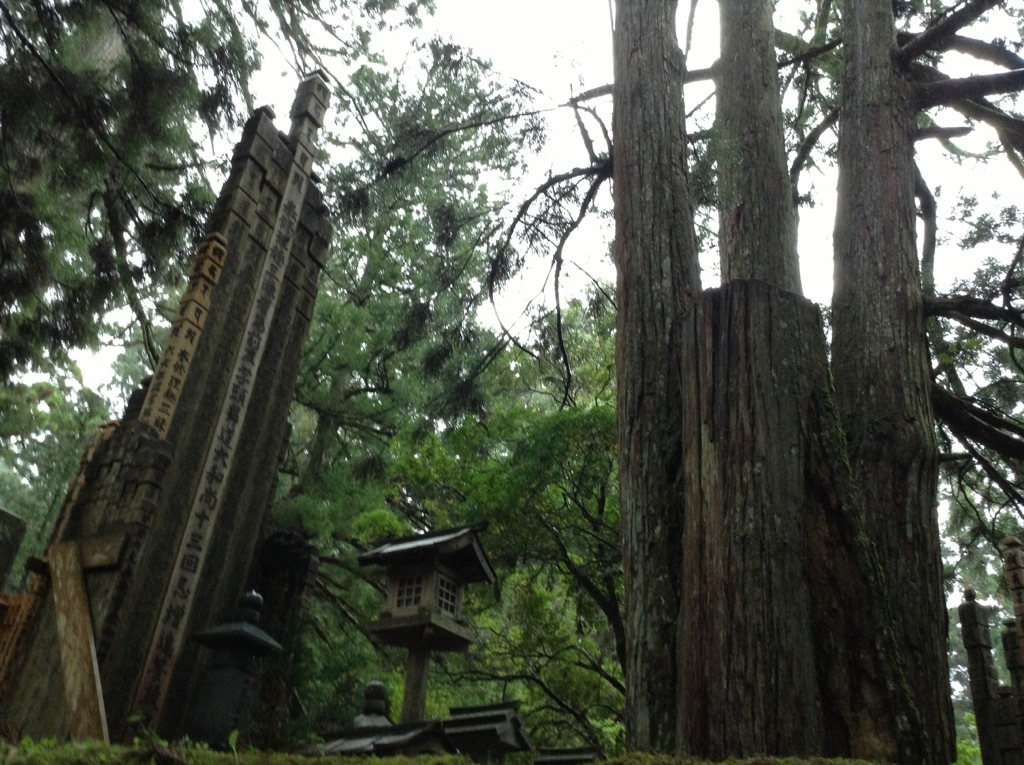
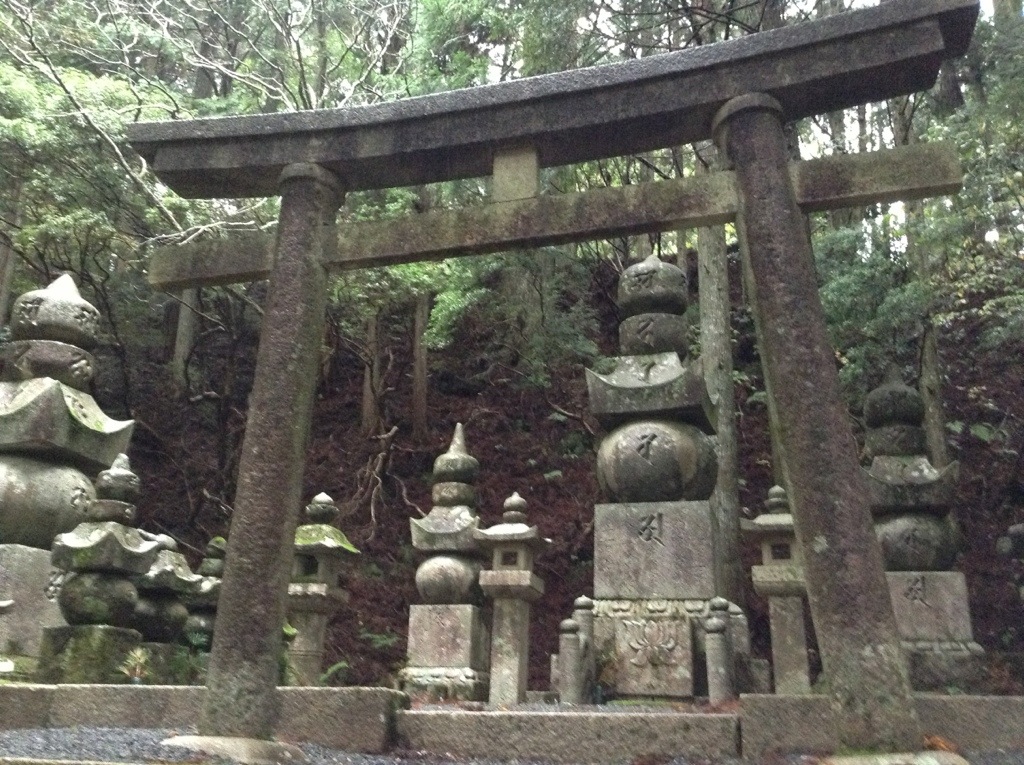
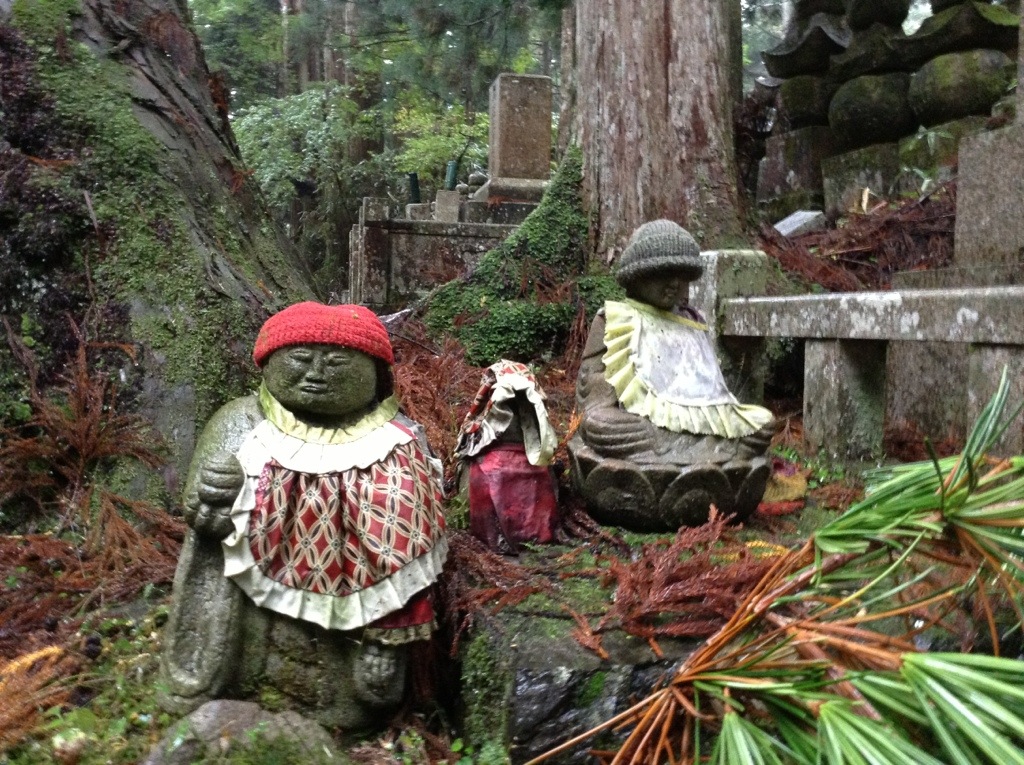
At the temple at the end of the walk I found something exciting: a stamp-book for the official path up the mountain. Public infrastructure didn’t reach Kōya-san until the early 20th century so for centuries pilgrims followed a path called the Chōishi-michi. I had heard about the path and wanted to walk it but originally gave it up due to a second typhoon warning. But I could not resist getting the first (last) stamp, and then once I had it in my hand I wanted to get the rest.
What was most appealing to me was the chance to re-live a bit of the Camino experience: following markers along a historic route and getting commemorative stamps along the way. But with bad weather and a pack twice as heavy as its Camino weight (with a borrowed hiking book and pounds of food), I was still undecided when I stopped at the Visitor Center to get a map. The woman behind the counter was beautiful, and as we talked she pulled out her guidebook of the Shikoku pilgrimage, and I showed her my Camino de Santiago stamp passport which I always carry with me. It was a nurturing connection and while she strongly encouraged me not to take the path, she said she would pray for me and for good weather.
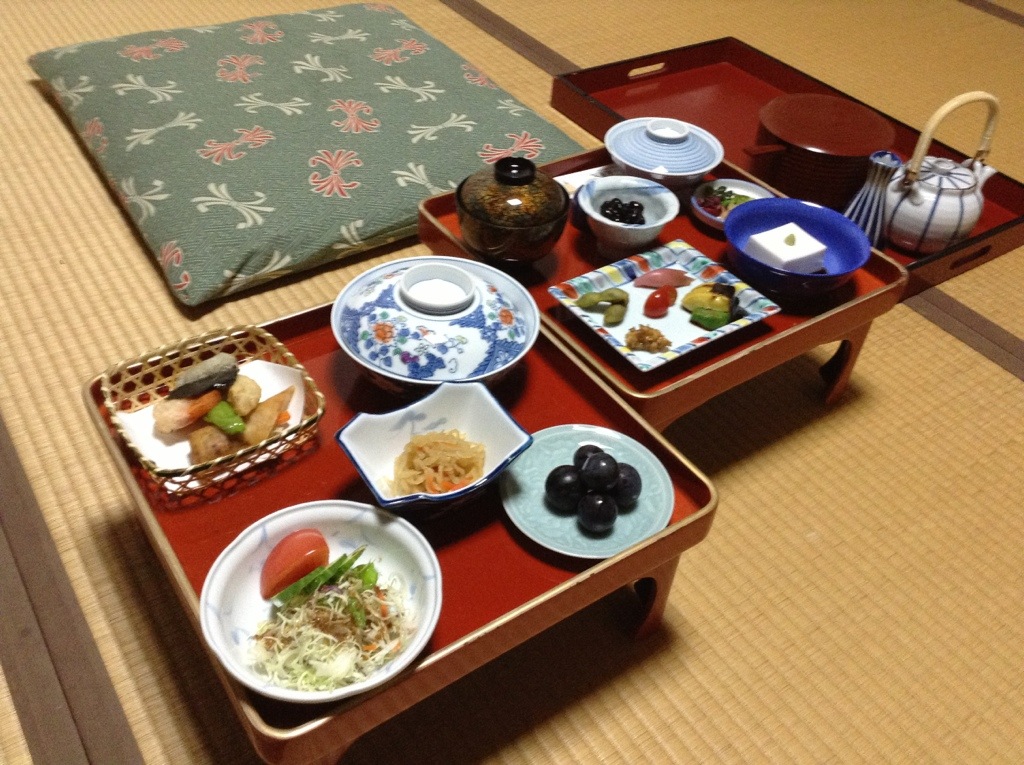
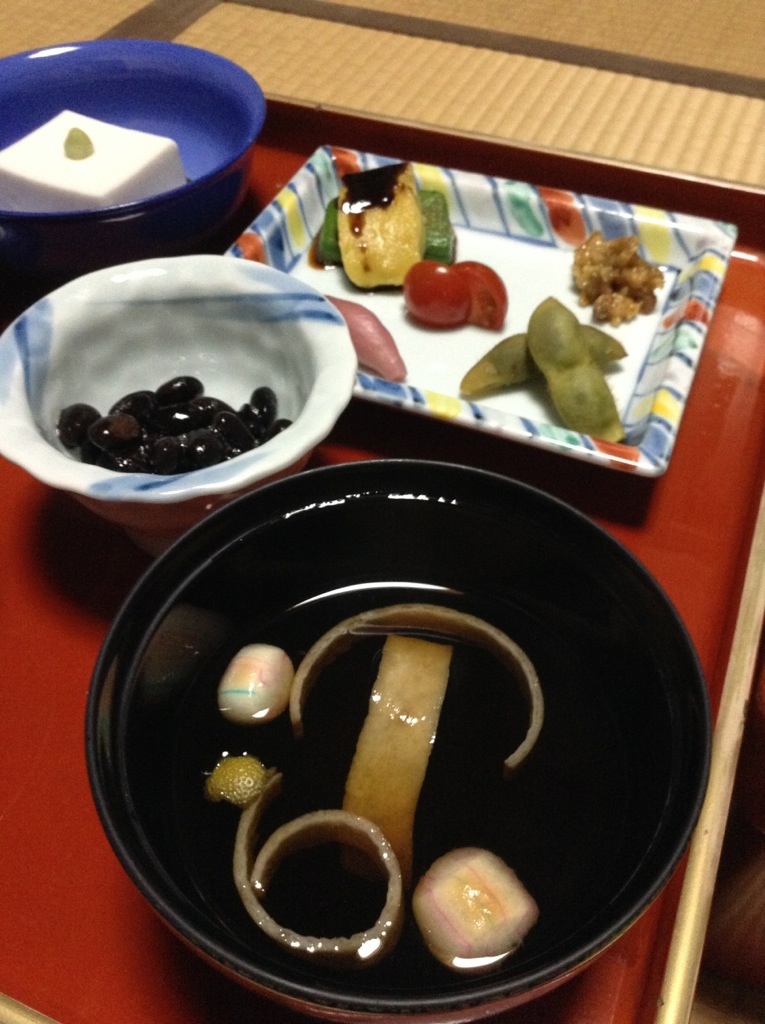
I returned to the Temple for an amazing, all vegetarian meal. The monks here eat entirely vegetarian and they also avoid garlic and onions (as they described, the sutras tell them not to eat vegetables that smell strongly). There were so many different little tastes, I tried to eat everything and still had to take a few breaks to lie down and rub my belly. A soak in the public bath after dinner helped my digestion, and I fell into a deep sleep on my futon (that was set up for me as I bathed) before 8 pm.
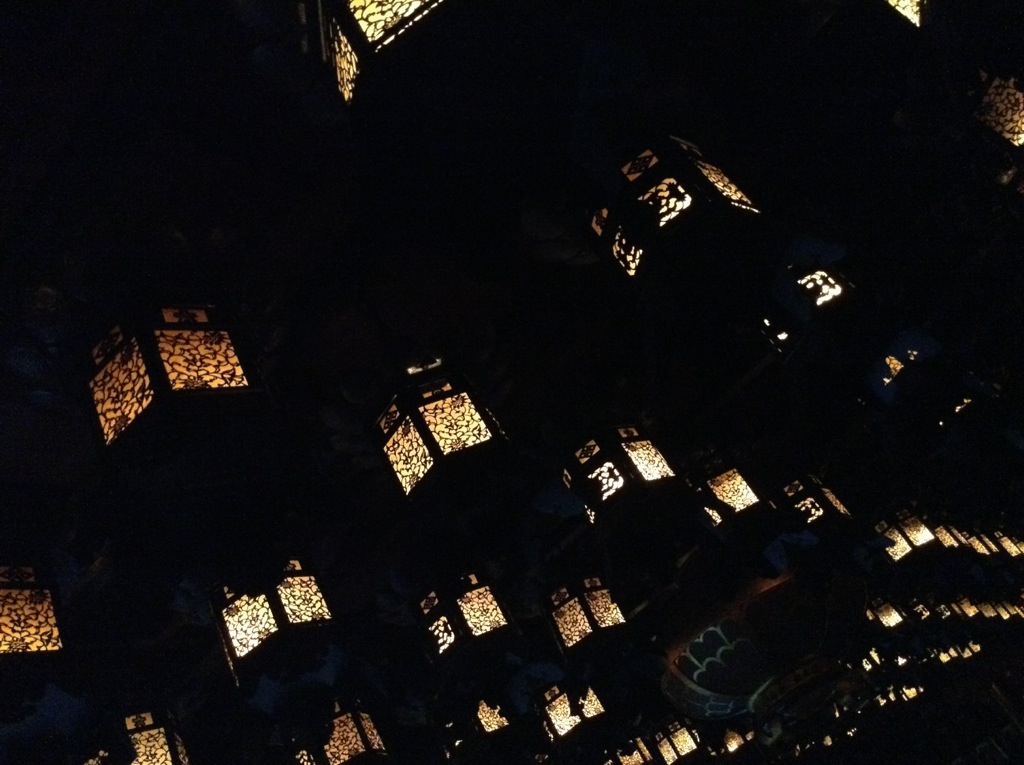
The next morning was cold and rainy, and discouraged me. It was pointed out to me recently that I often make things harder for myself, I think subconsciously to prove to myself that I can do it. So I thought no, it’s not worth it. I took part in the monk’s morning ceremony, most of which I meditated through, listening to the incredible tonal chanting, getting up to add incense to the fire when instructed. The hondo (main temple) was beautiful: lit by dozens of hanging lanterns, and everything gold.
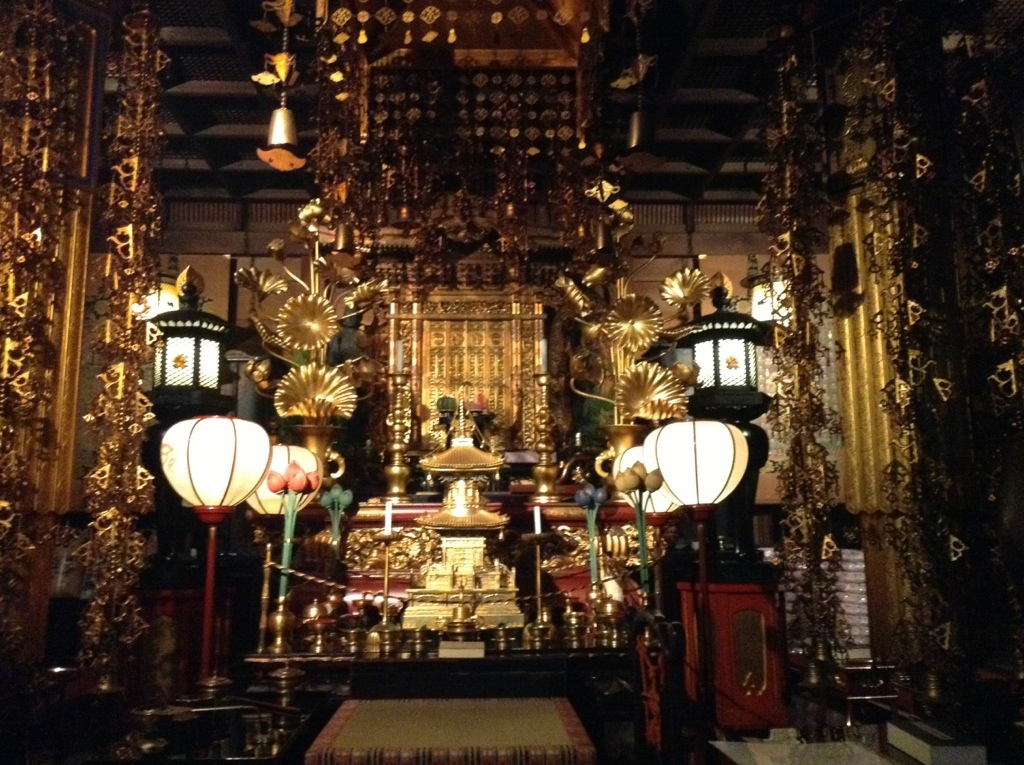
When I returned from morning ceremony my bed was gone and breakfast was in its place: soup, rice, tea, and more interesting vegetable samplings. Afterwards I headed out to see a few more temples before taking the train down the hill. However as I was walking in the spitting rain, it became clear to me that I would regret not doing this thing that I really did want to do. The trail was calling me. I rushed back to the monastery, packed up my things, and took off for the Daimon gate.
The Chōishi-michi is named for the stone monuments (ishi) set every chō (about 109 meters) along the way. Each is topped with the gōrinto five-tiered stupa which represents the five elements: “…the earth ring (cube), the water ring (sphere), the fire ring (pyramid), the air ring (crescent), and the ether ring, (or energy, or void)…” (wikipedia) 179 of the 220 chōishi are original, and have been greeting pilgrims for centuries. The path is 24 km long, and took me about 6.5 hours to complete.
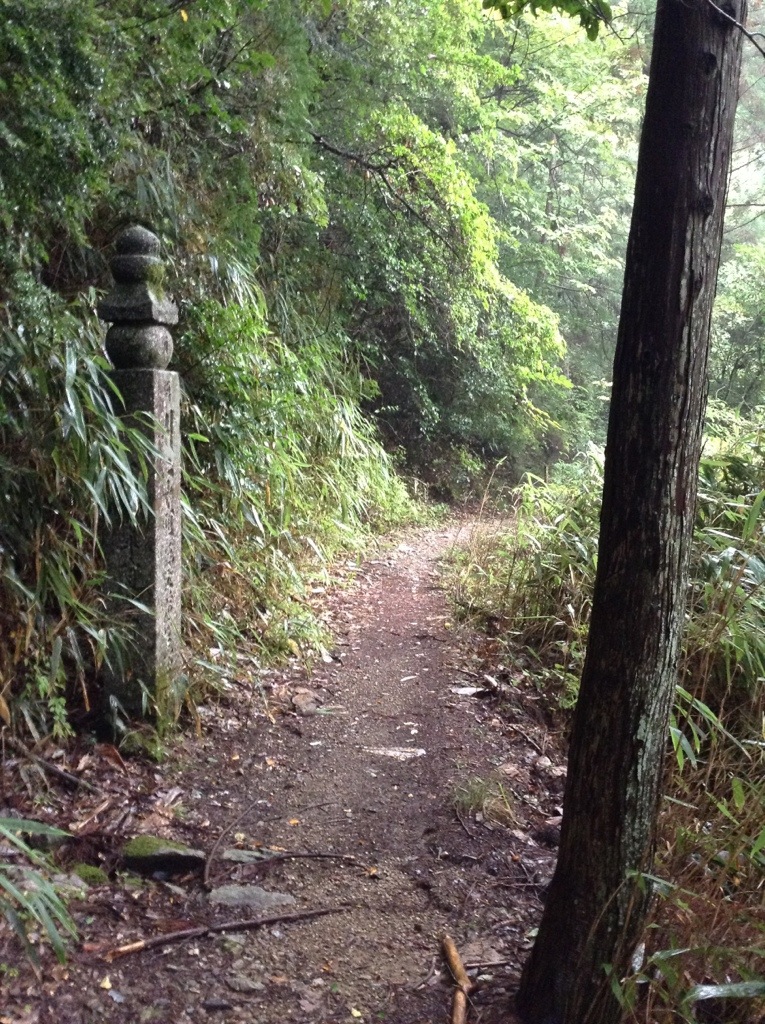
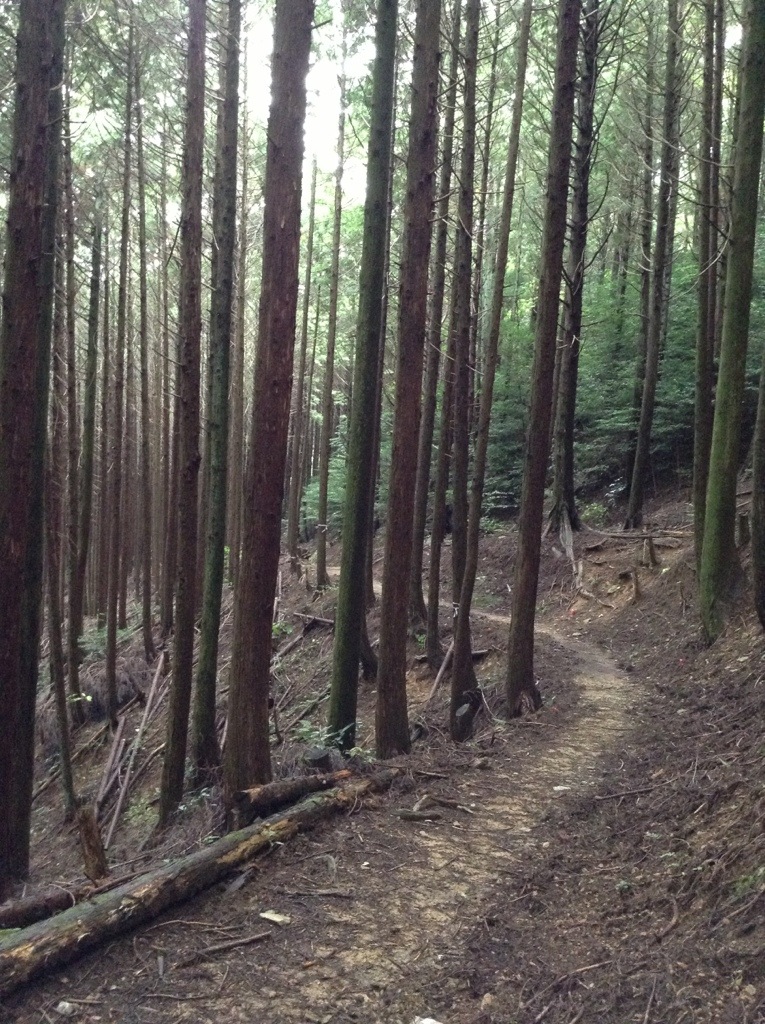
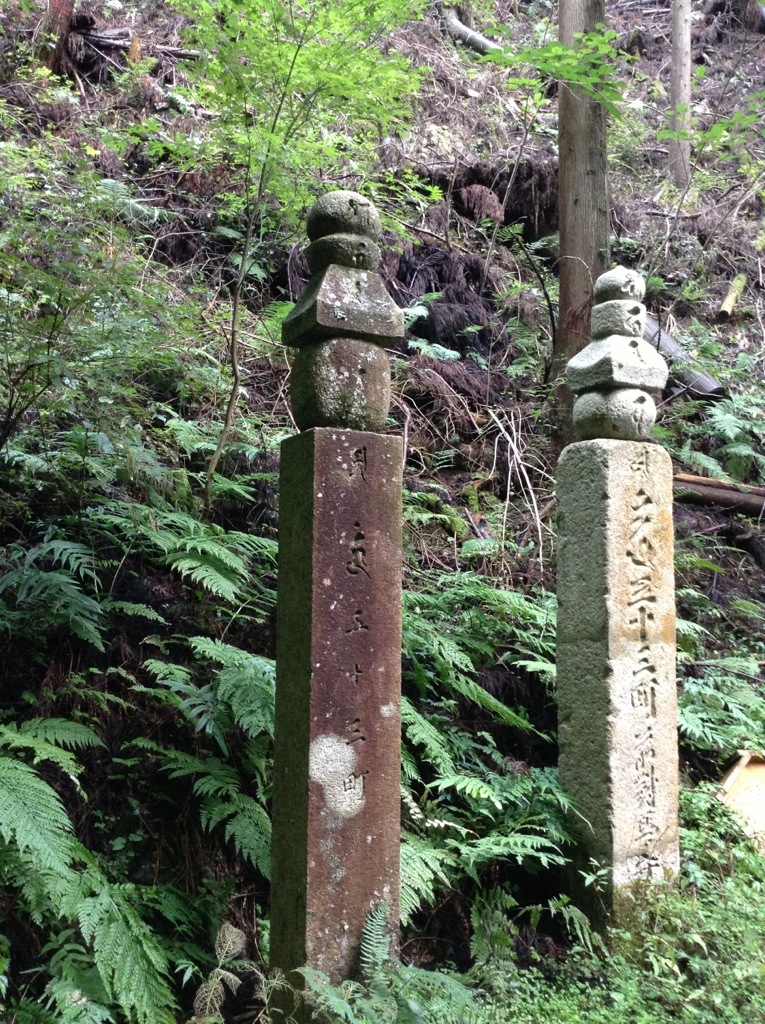
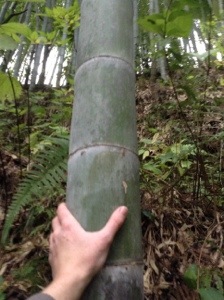
Most of the way was in deep forest and I happily meandered along, blowing my whistle every chō to warn any bears of my approach. The rain lightened up and I even had blue sky for a few minutes. The path was wet but mostly stable except for a long stretch along a stone streambed. As I got closer to town the forest gave way to an ancient bamboo grove, and then opened up to persimmon orchards.
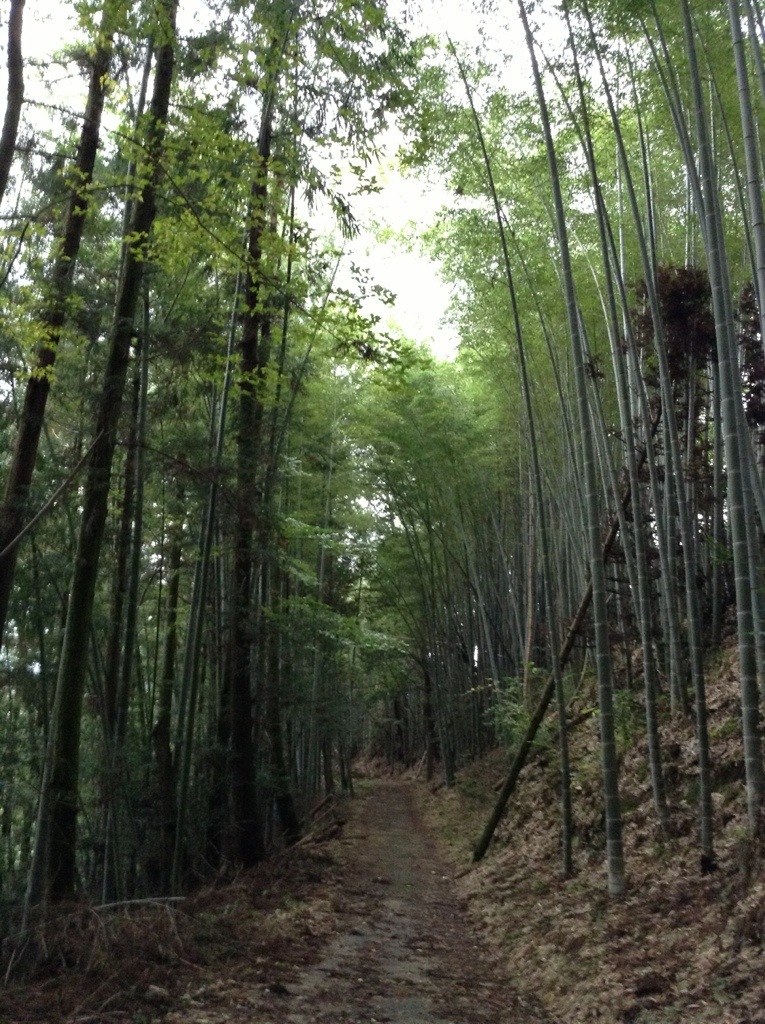
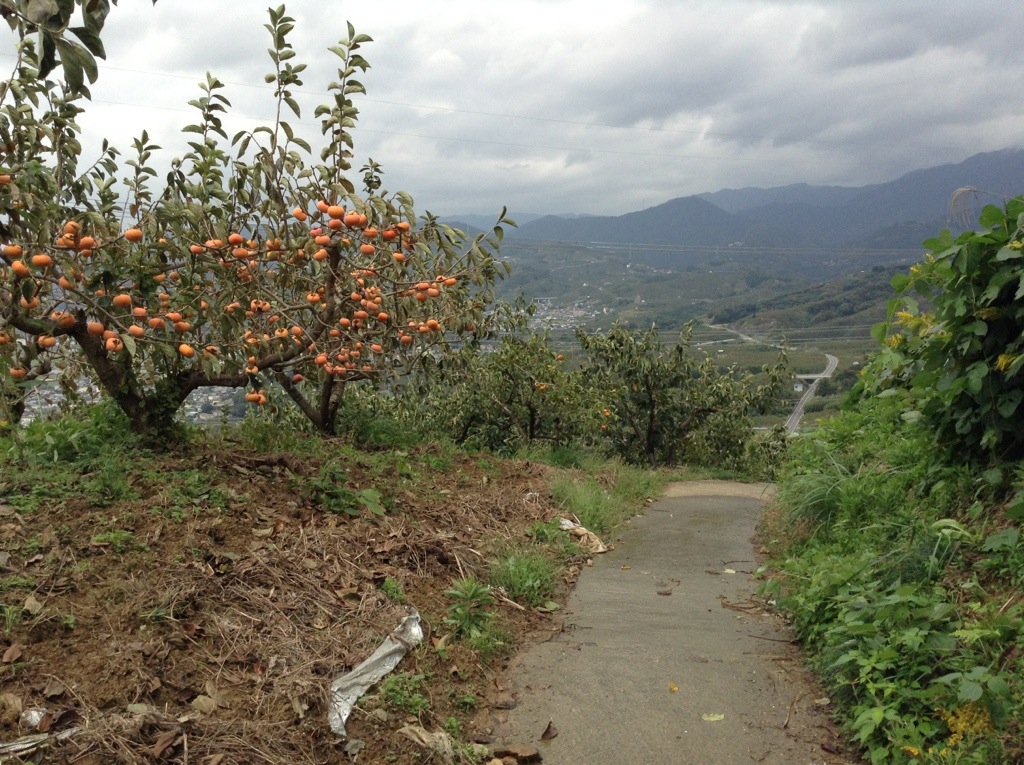
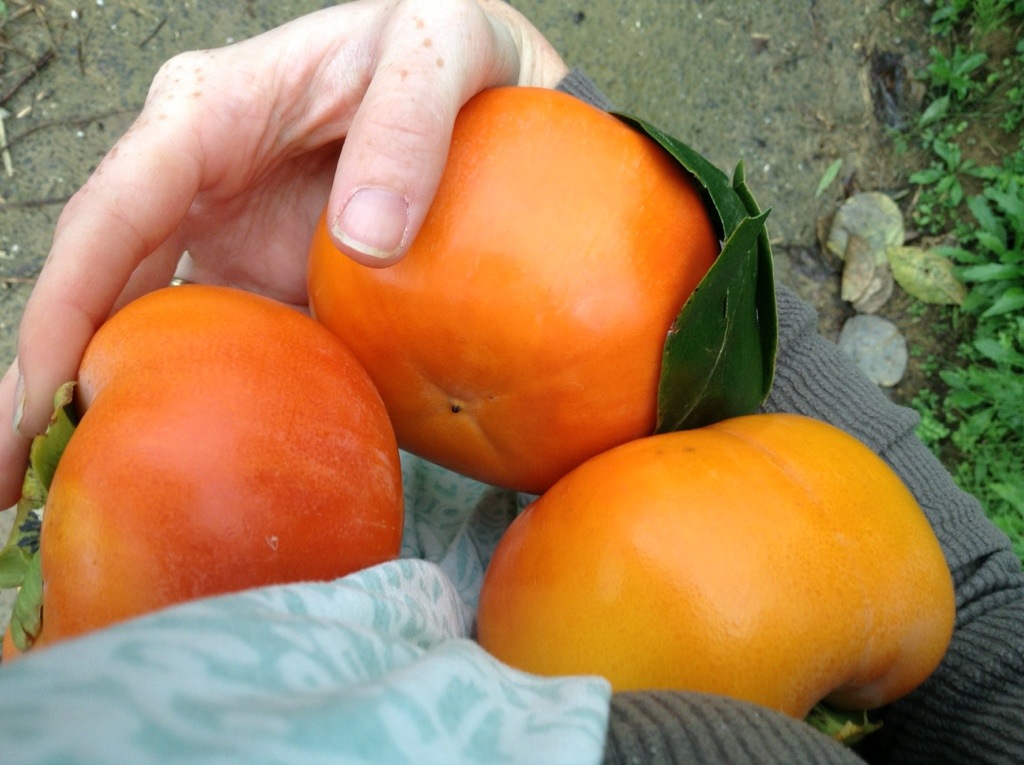
Amongst the orchards I took a wrong turn on one of the farm roads, and got completely lost. The hill was steep and the wind started blowing fiercely and it was time to get down. I saw a bridge in the valley which I thought matched a bridge on my map so I headed towards it. On my way I spied a truck amongst the trees and approached it, and found a sweet old couple sorting through their persimmons in the back of their antique truck. I pulled out my map and asked “Choishi-michi? Jison Temple?” They got excited and chattered to me in Japanese. All I could do was smile. Eventually they opened the passenger door of the truck and motioned me in. The woman deposited their three best, ripest persimmons in my lap and shut the door with a huge smile and a wave. The man started the truck with a bang and drove me about 10 minutes around the mountain in the opposite direction that I was headed, and pulled up right next to the next choishi. He tried to tell me something and gestured uphill but I told him I was tired, bowed and thanked him about ten times, and started along the path again with my umbrella on my arm, cradling an armful of beautiful fruit. I laughed the rest of the way down. What a beautiful world we live in.
I have purchased tickets to return to the USA in early December. I will spend time in California before Christmas and have nothing beyond that planned, although I am inclined to head south from there. As my return gets closer, I have started deeply thinking about how I can share this experience. What lessons have I learned that I could share? How has this experience changed me? How can my experiences benefit the ones I love?
While I was walking this day, two distinct lessons made themselves clear to me. I will share the first one today. I hope others will also be realized, and when they do I will share them.
Lesson #1: At the first sign of discomfort, address the problem.
This is true of a rock in my shoe, a seam rubbing under the hip-belt of my pack, and also true of all relationships. If I do not adjust when I notice the problem, the time it takes to heal becomes exponential. It will not go away. Deal with it when it’s still small and all it takes is untying the shoe and shaking it out.