My last posts have been manic, “I need to post SOMETHING with my 2 hours of internet so they know I’m alive!!” Maybe you’ve noticed. Now that I have some time and I’m not worried about my battery dying, I’ll give a more detailed description. This is mostly a stream of thought about what I’ve learned, to give you a rough idea about Mongolia if you are like I was and know little about it. Admittedly some of this is probably wild generalization, but it is what I have experienced or been told be Mongolians that I have asked.
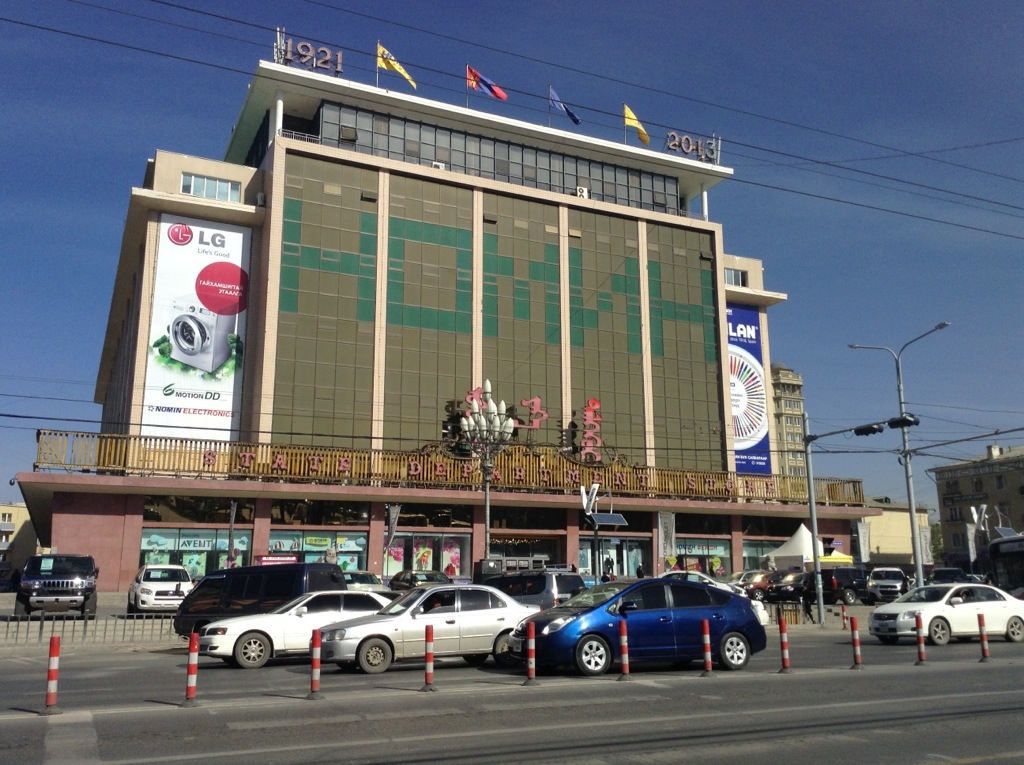
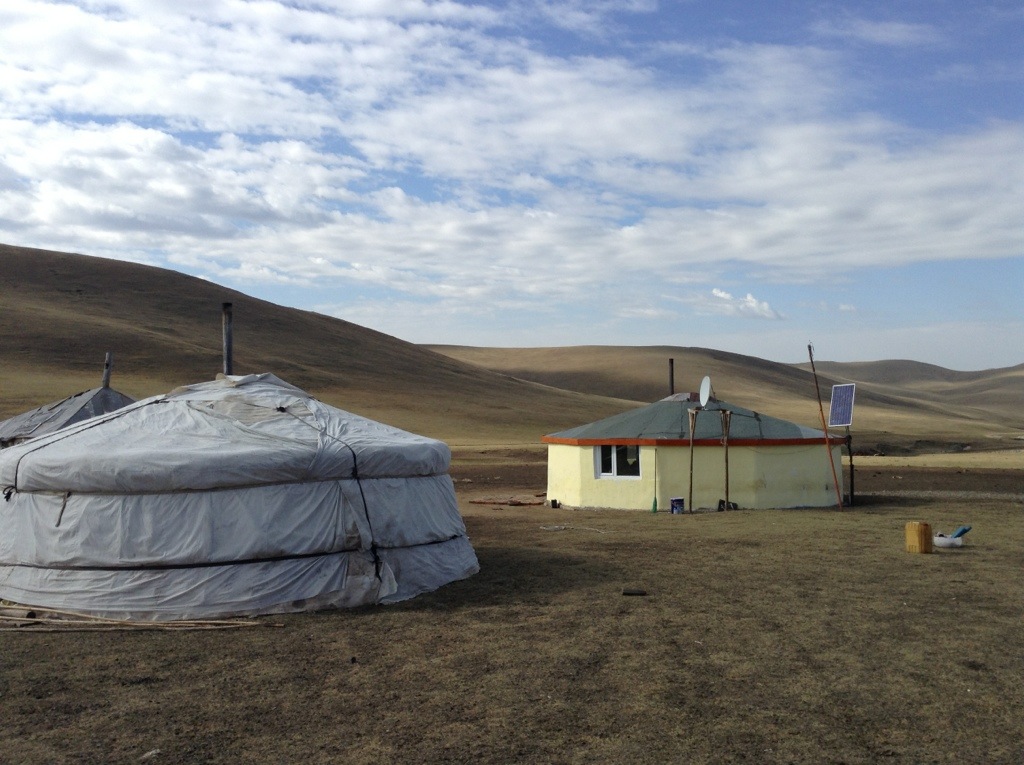
Mongolia has about 3 million people, of which half live in the capital city of Ulaanbaator. “UB” strikes me as a cold dirty place with a lot of traffic and pollution from the coal smoke in the winter. The rest of the population live in either small towns, provincial capital towns (also pretty small), or as nomads. The nomads, as well as many people living in the towns or the city, live in ‘gers.’ I heard a Mongolian boast that they can be assembled in 2 minutes and disassembled in 1.5, although they more commonly say about an hour. They have wooden lattice walls with either 6, 8, or 10 sides, and a round dome roof. On top of the structure they layer wool felt, waterproofing, and an outer layer of white canvas. In the winter they can have up to 8 layers of felt while in the summer only 1 or 2. Some families move four times a year but now most only move twice. In the summer the good places are close to water and good grass, in the winter at the base of sheltering hills. The same families return to the same places every year, kind of an ancestral land system, although they may make agreements to swap or share with other families on occasion. None of the land outside of the towns is owned, and if no one has been there it’s up for grabs!
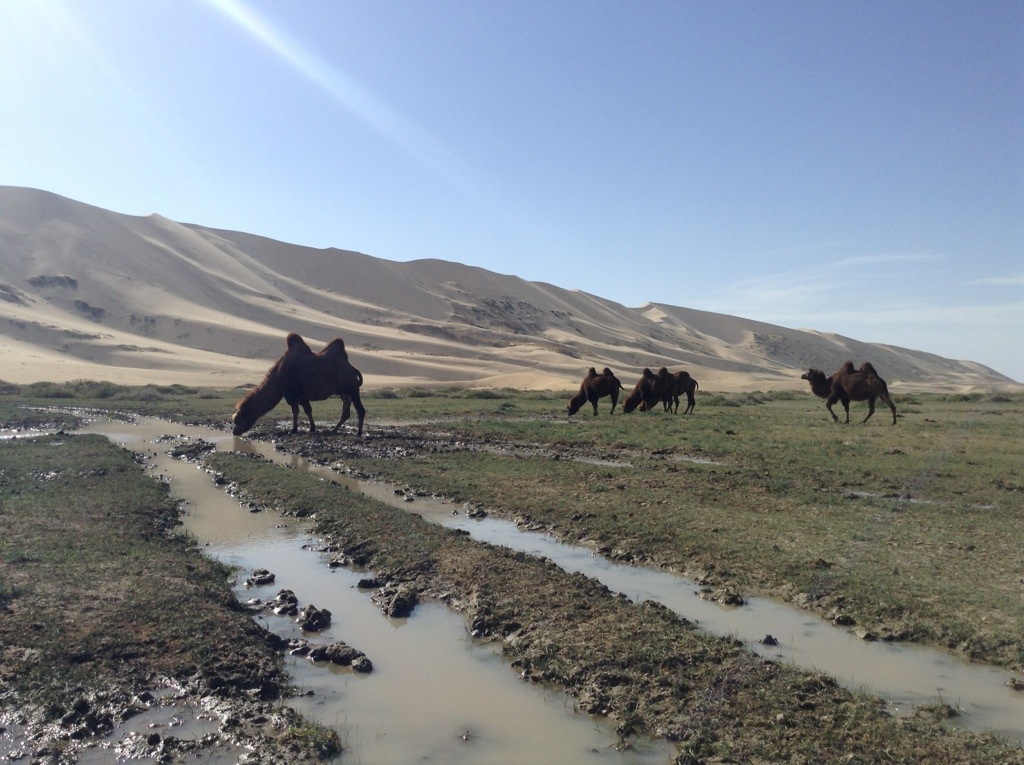
The nomads are herders. There are five main types of livestock; sheep & goat (often herded together), horse, cow, camel, and yak. They are all valuable for their meat, milk, and fur/hair, in different degrees. The horse is the symbol of Mongolia, for good reason. It was the hardy horses that helped Chinggis Khan develop his mighty empire. There are more horses than people and at some point it dawned on me that they can’t all be for riding, especially when you see guys herding them on motorcycles; turns out horse meat is considered to be a “hot” meat that is good to eat in the winter because it doesn’t freeze. I turned down the only horse meat I was offered, which was sausage made from the innards. I have drunken fermented mare’s milk on multiple occasions. I’m also fond of yak butter and cream. I did try camel meat and was surprised that it is super fatty here. The bactrian camels are very different from the dromedary in the Sahara.
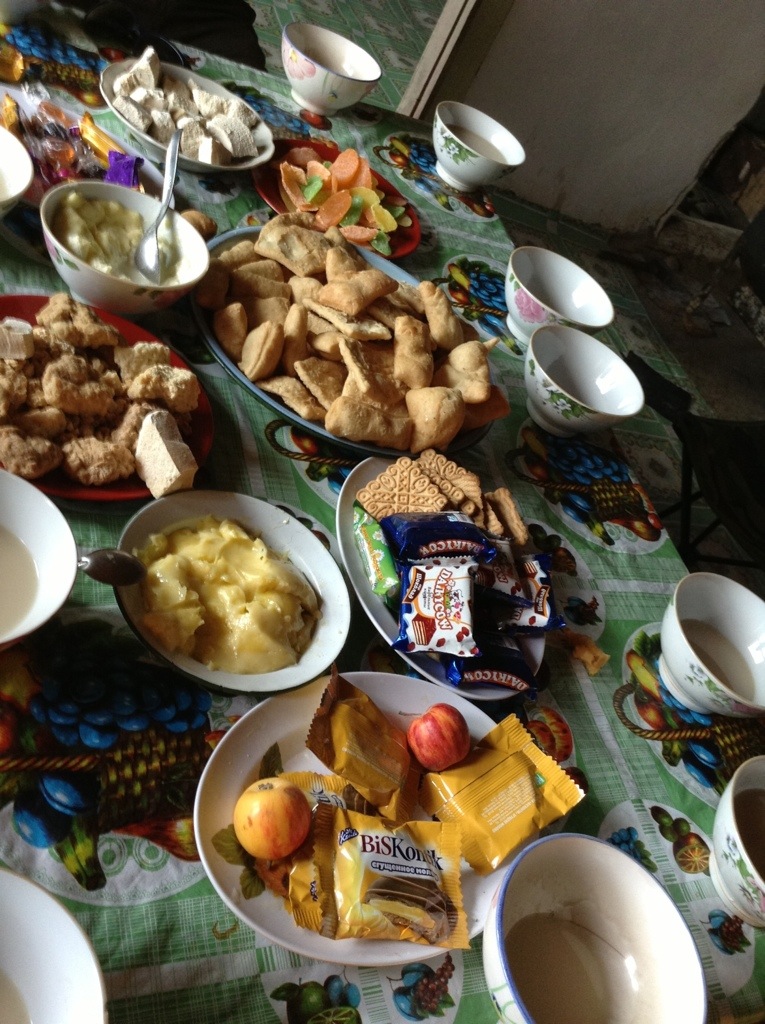
When entering a ger, the first thing you are always offered is “milk tea.” This is very watered down tea with milk and salt in it. I like it, but most people don’t. Next is a big bowl filled with dried sour cheese curd (sometimes called “stone cheese” because it gets so dry it can break your teeth unless you soak it in tea first), bits of hard pastry and candies, presented in a way that reminds me of Halloween trick-or-treating. I also like the cheese curd, although the hardness and sourness ranges a lot ger to ger.
If you’re lucky enough to arrive shortly after a goat is slaughtered you may be treated to barbecued liver wrapped in fat (which is actually delicious). If you arrive during dinner you will be offered a place on the floor to dig in to whatever meat, potatoes, or noodles are on the menu. You will most likely be offered a seat next to the iron stove in the middle of the ger which functions as cookstove as well as heater, and is fueled by wood, coal, plastic, or dung, or a combination. The dung surprisingly doesn’t smell at all but it burns quickly.
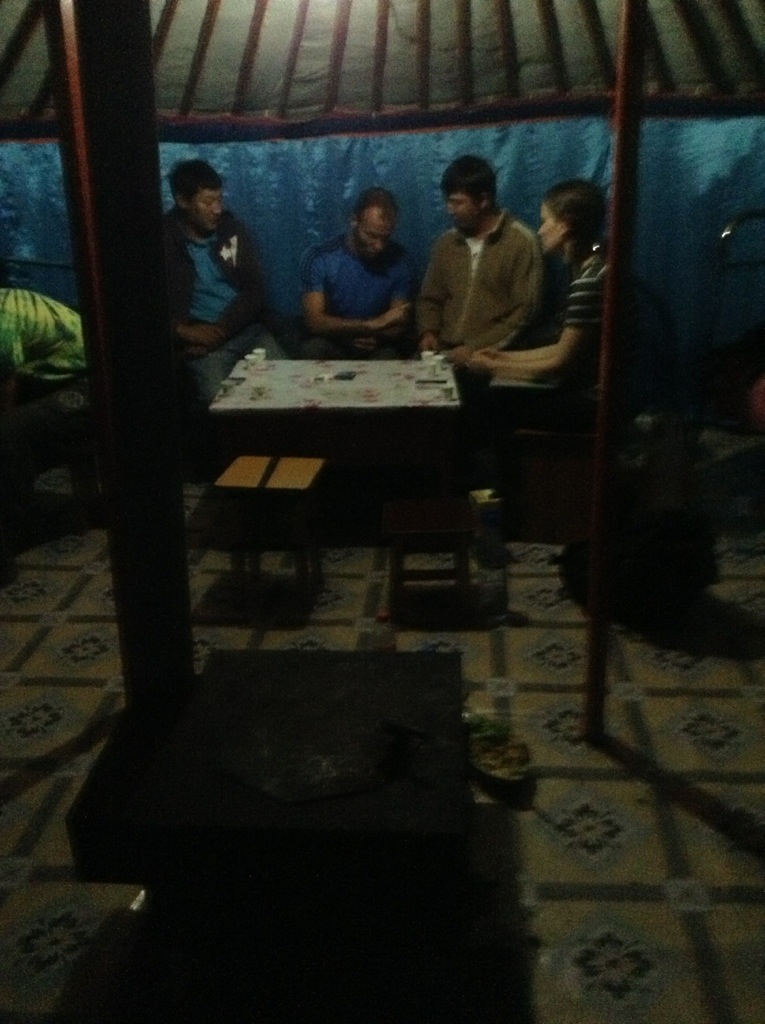
The most amazing thing about all of this is that you will be offered these exact things in quite literally any ger you choose to stop in. I’ve heard that this is out of necessity; with so few folks in such huge spaces you are at once independent as well as mutually dependent. If your car breaks down (or horse runs off), you will get help from the closest ger. And they will help with whatever you need because they would expect the same in return. Mongolians are very proud of their culture of hospitality, as they are proud of their beautiful country and their infamous leader Chinngis Khan.
Some of the gers are surprisingly advanced, with solar panels, tvs and satellite dishes. They can be quite comfortable inside. However the sanitation system is lacking. Every ger I have been to (which is more than fifteen now) either has no toilet, or a pit toilet, which is often no more than a few slats of wood over a pit in the ground and a low wall on at least three sides that is never quite high enough to stand up before buttoning up your pants. Sometimes they have a roof. Sometimes they have a door. They never have toilet paper. They often have a fabulous view.
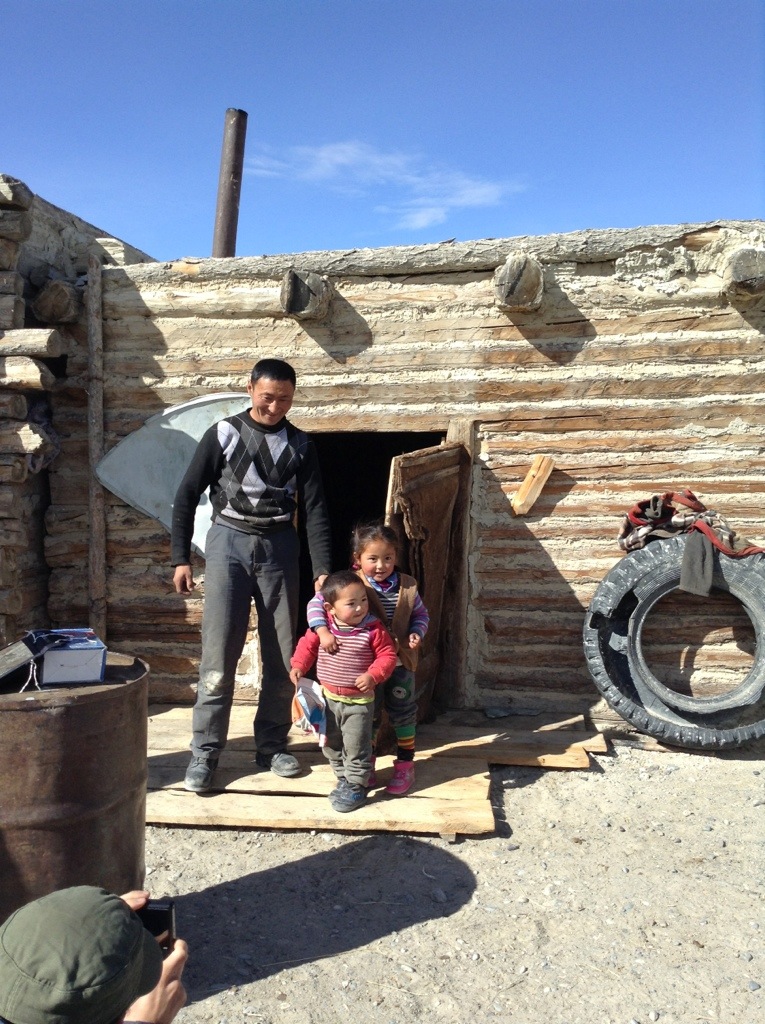
Children in nomad families go to government funded boarding schools in the closest town. If the town is close enough they come home on weekends, otherwise they won’t see their families most of the year. Boys and girls are required to attend twelve years of school, recently changed from a ten year system. There are apparently no towns in the far north for the 300 or so “reindeer people,” but the government is offering scholarships.
There are few paved roads, and it seems many people don’t like to drive on them because it is “dangerous.” They prefer “Mongolian highway” (rutted dirt tracks) where you can’t go too fast and there is nothing to hit anyway! Much safer! That may or may not explain all of the vodka bottles scattered across the countryside.
In addition to the Mongolian ethnic group and the “reindeer people” in the north are the Khazaks in the west as well as a few other smaller groups. The Khazaks have obviously different facial structures and a different language. Supposedly some of their customs (such as eagle hunting) are better preserved in Mongolia than in the native Khazakstan. Many if the Khazaks identify as Muslim, although they don’t necessarily practice. Many other Mongolians are buddhist, and a few are shamanistic.
Chinngis Khan is their biggest historical figure, but unfortunately little physical remnants of his empire remain. Nomadic societies often do not leave physical remains behind, and in Mongolia the fee monasteries that existed were destroyed by the Stalinist purges in the 1930s. Even so, many Mongolians and the government feel positively about the Russians, who helped them gain independence from China. Similarly, many dislike Chinese because of the history of control, as well as the workers who come and take their jobs and the companies that mine and export the metals and coal. There also seems to be a strong Korean influence.
….Thats all that comes directly to mind. A lot of random information! I am currently with my second group of tour-mates in a Mongolian family’s apartment in Ölgii. We have had an amazing 5 days in the west and I am SO EXCITED for the annual Eagle Festival tomorrow. We’re drinking milk tea and heading to a Turkish restaurant for dinner in a couple of minutes. Besides a lingering stomachache from too much mutton, Life is good!!!
Fascinating. I know nothing about this part of the world. The nomads you describe sound like our Native Americans before the Europeans came and destroyed their way of life and stole their land. I hope these people can continue to live with and on their land. They have so much to teach us about 7th generation principles and sustainability.
Wow Nicole, Mongolia is a lot to absorb! Thanks for the glimpse into a faraway world. How do you decide where to go and where to stop? It appears the people there enjoy visitors- is it your experience that they are open to outsiders? ‘Look forward to the next post……Caroleen
Thank you for this incredible peek into this very different place. I loved seeing the ger, and how people there live and eat. And II can’t wait to hear about the eagle festival. I wonder how many places on Earth have eagle festivals.
159 In another part, he describes the economic and financial strength that some businesses are capable of procuring, where he writes,